A Little Known Hero – 1½ minute read

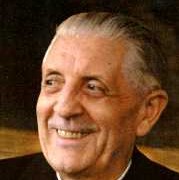
SuenensAs a young engineer, I found an abandoned poster in a closet where I worked. I retrieved the poster and hung it in my office. The poster quoted someone I didn’t know. “Happy are those who dream dreams and are ready to pay the price to make them come true.” The words implied the necessity of working with and for God versus mere wishing. This quote became a motto to me and resulted in a lot of my dreams coming true.

I recently decided to find the source. I’ll bet you’ve never heard of  Monsignor Leo Joseph Suenens. As a young professor, he specialized in moral philosophy. When Germany invaded Belgium in 1940, he served as a chaplain for his country’s army. During the subsequent occupation he resisted and sometimes openly defied the Nazis. They condemned him to execution, but the Allies liberated Belgium before the orders could be carried out.

In 1962,  Pope John XXIII said of the Catholic Church it was time to, “open the windows and let in some fresh air,” and called the Second Vatican Council. The meetings quickly fell into chaos with the weighty issues and the diversity of views. At the request of the Pope, Monsignor Suenens took over the agenda and led the Council to consensus through three years of contentious meetings. The Council issued a “universal call to holiness” and made many dramatic reforms such as ending the requirement that all masses be conducted in Latin.

A lot of people are affected by godly men and women they never heard of. I’ve often shared that seeing lives of people who don’t know me changed through my work is the greatest joy in ministry. I hope Monsignor Suenens, perhaps watching from in heaven, has received great joy from the effect his words had on me.

Drew Coons

Posted in Uncategorized | 4 Comments

Dream Horse – ½ minute read

Dream HorseKit and I went to a movie last weekend for the first time in seems like forever. We like  true-life British films.  To our surprise the movie Dream Horse is a perfect embodiment of our more-than-ordinary-lives theme.

Our stated philosophy is, “Each person’s life is unique and special. In that sense, there is no such thing as an ordinary life. However, many people yearn for lives more special:” However, we caution about making reckless or poorly considered choices. Dream Horses’ characters carefully plot how to give themselves the best chance to be successful at minimal risk and are rewarded with special life-enriching experiences. Our prayer is the same for each of us.

Drew

Posted in Uncategorized | 2 Comments

Orcas – ½ minute read

DSCN3135 (2)Orcas are like rock stars in Washington. Distinctive markings allow marine biologists to name and track the life history of each. We have 74 who are year-around “residents” in local waters. Pictures of orcas lunging onto a beach to grab a seal pup conjure up their nickname, killer whales. Not our genteel 74 in Washington, though. They only eat fish.

Facebook and other notifiers light up when the celebrities approach our beach. But Kit and I never noticed or made it to the water in time to see them. And so, we took a whale watching excursion. We saw Sidney (female age 36), Stanley (male age 21), Lucky (male age 8), and Darcy (female age 3). They, known as pod T123, are not residents but Alaskan whales on an excursion of their own. Probably they are looking for the many unwary seals in the Puget Sound. In addition to the orcas, we saw a gray whale, two sea otters, and a harbor seal relaxing in the general direction the orcas headed. I’d warn them of trouble on-the-way, if I could.  

What is God teaching me in this stage of life?  Among more spiritual things, don’t wait to see whales from the beach. Take the initiative to go find them. And as we get older this life’s trouble is on-the-way for all. Enjoy moments.

Drew

Posted in Uncategorized | Leave a comment

Does God Know Everything? ½ minute read and a six-minute read

BibleKit and I have less responsibilities right now than ever before. This gives us the opportunity to explore perhaps overlooked corners of the Bible. Items wouldn’t be in scripture unless they were meaningful. Following is an interesting question and some scriptures with which you may not be familiar. I’ll welcome comments or alternate intrepretations.  I’m trying to learn about God.

In Our Lord,

Drew

Does God Know Everything?  a six-minute read

Sometimes I purchase a book. The entire book belongs to me. I am free to use it any way that I wish. For the most enjoyment, I usually read books from the beginning. But sometimes I skip sections or even jump to the ending. Frequently I review sections already completed. This is my book, and nothing dictates how I must use it.

In a much stronger sense than I own a book, all of creation belongs to God including the measurements we know as “time” and “knowledge.” Is God less free with His creation than I am with a book? Can’t He observe His creation in any way that gives Him the most satisfaction or serves His purposes? Like I usually read a book from the beginning, God may choose to follow some aspects of His creation according to His created time.

As Bible teachers, occasionally we are asked if God knew that Adam and Eve would sin. Almost anyone would simply reply, “Of course. God always knows everything.” Total omniscience is the generally accepted “all knowing” view of God. The concept was embraced and taught by John Calvin in the 16th century and still permeates most people’s concept of God. This “all knowing” concept of God leads to inevitable debates about whether “God caused this,” or “God allowed this.” Either way the ultimate responsibility is placed on God. Unfortunately, this attitude carried into everyday life can result in unspoken blame or resentment of God when bad things inevitably happen.

A.J. Tozer wrote, “The most important thing about a man is how he thinks about God.” Our view of God affects the way we live. I fear that our concept of God is often influenced by what we want to think about God. And most people want to believe that God always knows all and thereby can control all. The belief that God controls all can give comfort, but also takes away some personal responsibility which can lead to poorly considered choices.

Probably God did know Adam and Eve would sin, because they were part of His plan to set up a redemptive system for mankind. But you can also make a biblical case that God does not know, or chooses not to know, everything. Theologians call this concept “inherent omniscience” meaning that God can know everything that He chooses to know. Jeremiah 31:34, Hebrews 8:12, and Hebrews 10:17 which all quote God as saying, “And their sins and their lawless deeds I will remember no more,” appear to be clear examples of God choosing to not know something. Those who start with total omniscience as a premise frequently interpret “will remember no more” as “will not hold against them.”  However, there are additional scriptures which can collaborate the idea that God may not always know everything.

Consider scriptures such as Amos 7:3 and 7:6 which say, “the Lord changed His mind.”  In Exodus 32:10 (and Numbers 14:12), God pledges to destroy the people of Israel and make a great nation from Moses. After Moses entreats the Lord on behalf of the people, Exodus 32:14 says, “So the Lord changed His mind . . .” In the “all knowing” view of God, He knew that he would change His mind. But you can’t change your mind, if you always knew. Total omniscience and these scriptures seem to be a paradox.

In Jonah, God stated clearly that he was going to destroy Nineveh. Then circumstances changed and God “relented” (Jonah 3:10.) Because God “cannot lie” (Titus 1:2), we must conclude that He fully intended to destroy Nineveh but changed His mind or relented. Jeremiah 18:8 and 18:10 also suggest change of what God has stated as a possibility. In 2 Samuel 12:22 David, who knew God intimately, clearly thought that God might reverse what He had said. But if God always knows all the future, then He would know that He would eventually reverse Himself. Would that not make the statement a lie? This cannot be. Then God may choose to not know everything in advance.

Or consider Genesis 6:6-7 where God was “sorry” that He had made man, or I Samuel 15:35 where God “regretted that He had made Saul King.” In the “all knowing” view of God, He would have known that he would be “sorry” or “regret” His own actions. How can you regret doing something when you knew the outcome in advance? Is this another paradox?

These scriptural examples may indicate a different aspect of God than the popular theology of total omniscience. Certainly, all knowledge is accessible to God.  “God sees all things, and nothing can be hidden from His knowledge not even the secret intentions of the heart.” (Psalm 44:21)  But to discover the most accurate picture of God requires that all the scriptures be considered, including scriptures which indicate that sometimes He does not know things in advance. Together the scriptures fit a theology where God can know anything including the future but chooses to know selectively.

Jesus said that God knows when even a sparrow falls. He did not say that God always knows when the sparrow would fall. I can only speculate why God might choose to not know all the future. Perhaps like I usually enjoy reading a book from the beginning, following our lives according to time as He created it is more satisfying to God. Or maybe not knowing all things is God’s mechanism to grant free will to us while maintaining His sovereignty.

For me personally, considering that God may choose to not know all the minute details of my future makes me more thoughtful about my actions. I am not tempted to blame God when things don’t go well. And I feel deeply honored and closer to God because we share the adventure of my life from Him together. Choosing to not know everything takes nothing away from God’s ultimate power and sovereignty. The possibility only makes God more personal to me.

Drew Coons

All scriptures in NASB

Posted in Uncategorized | Leave a comment

Covid Setback – 1 minute read

virus-graphicWashington State’s county-by-county protocol for covid reopening specifies that more than five hospitalizations per 100,000 persons within a seven-day period sends a county back to Phase 2 shutdown. We’ve edged up to 5.7.

Kit and I, having recently enjoyed dining out and visiting museums, are disappointed. We’re reluctant to resume stringent precautions. But I think doing so is the right thing. A friend, Bill Hunt, sent us the following quote from Martin Luther during a sixteenth century plague. His words summerize what I consider to be my responsibility as a follower of Christ.

“I shall ask God mercifully to protect us. Then I will fumigate, purify the air, administer medicine and take medicine. I shall avoid places and persons where my presence is not needed in order to not become contaminated, and thus perchance inflict and pollute others, and so cause their death as a result of my negligence. If God should wish to take me, he will surely find me. But, I have done what He has expected of me, and so I am not responsible for either my own death or the death of others. If my neighbor needs me, however, I shall not avoid place or person, but will go freely. This is a God-fearing faith because it is neither brash nor foolhardy, and does not tempt God.” Martin Luther

Posted in Uncategorized | 2 Comments

New Neighbors – ½ minute read

Owls

“But ask the animals, and they will teach you, or the birds in the sky, and they will tell you;”   Job 12:7

We have new neighbors. A pair of barred owls have claimed our yard and woods as their home. Informally known as the “hoot owl,” barred owls are quite vocal both day and night. Hearing an owl used to be considered bad luck even a harbinger of death. Bad luck and death are true for some creatures. Our owls hoot in celebration when they catch dinner. Otherwise, they hoot to designate territory, attract a mate, or apparently just for the joy of making noise.

The Bible says that wild creatures can teach us. “Teach us what?” you may ask. According to verse nine of Job 12, their lives indicate “the hand of the Lord.” I can see God in the uniqueness and wonder of His creatures. And I admire their God-given resourcefulness. Wildlife’s unpredictable independence adds variety and even humor to my life. Owls and other wild neighbors can be a gift of joy from God.  

Drew Coons  

Posted in Uncategorized | 2 Comments

No Expiration Date – A Miracle?  1 minute read


Carotid with LabelsSix years ago, I suffered a serious stroke due to plaque blockage in both carotid arteries. Doctors gave me probability of four years without surgery and recommended immediate surgery to my left carotid. That surgery—which itself added significant risk—and care could extend my probability to ten years. But they warned that the right side, also with significant blockage, would not improve on its own, even with medication. Regular monitoring would determine when I needed additional surgery on the right carotid. After success of the first surgery, I accepted the hope of ten probable years with gratitude. I joked about 2025 as my expiration date.
A few weeks ago, I reported for my annual doppler scan. The vascular surgeon after reviewing the results said, “You look fine. I don’t need to see you again.”

 “You mean until next year?” I asked.

 “No, I mean you don’t need to come back, ever.”

 I reminded her about the right-side blockage.

“Well, both carotids are completely clear now. Chance of any difficulty in your lifetime is remote. You never have to come back.”

“Except for checkups?”

The doctor showed some frustration. “Occasionally these things happen. No more checkups. I never want to see you again!”  I left before she called security.

Immediately, I realized, No more expiration date! At least none due to my carotids.  I hope you’ve received such good news sometime in your lifetime.

Afterwards, being Drew, I wondered what had happened. Has God miraculously healed me? Do I have a God-given quirk of genetics that caused my body to correct itself? Did God-motivated change of eating and exercise habits make a difference?

I don’t have those answers. But I’m certain God was involved somehow. And I believe that God guided me to take the steps I could; the surgery, satin drugs to prevent further plaque buildup, plenty of exercise, and avoiding saturated fats. Maybe God wants to do miracles more often than we realize but expects us to do our part first. That includes preventative medicine.

Drew

Posted in Uncategorized | 6 Comments

Our Library is Open – a 1 minute read and an offer

DSCN3004 (3)

Our Kitsap County, having strictly complied with Covid protocols based on new cases, is in Phase 3 of reopening safely. Libraries, museums, theaters, and restaurants are now open. Coincidently, spring has spung under cloudless blue skies. Rhododendrons and other flowering shrubs grow wild in profusion in western Washington. Reopening as spring blossoms seems appropriate.

Our winter was mild compared to the one most of you experienced. An “about normal” number of rainy days wasn’t much different than Arkansas. Still, we spent most of the winter quarantined and writing. Although having enjoyed writing it, we decided not to publish our seventh novel. Who wants to read math-fiction?  But we also wrote wholesome short stories designed for use in literary periodicals. Because publications want “First Rights” we cannot post the stories on our website. But we can allow individual reviewers to read and critique the stories.

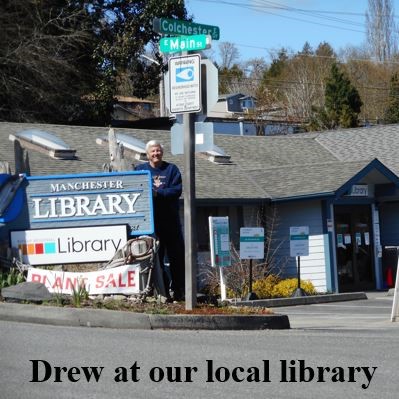
Therefore, the  Coons’ library is open too. If you would like to review some—we think good—stories, we can provide them to you. Just ask us for stories you would review at kitndrew@comcast.net or kitanddrew@gmail.com. Please give us a little feedback after reading a story.

Village Magic (999 words) A fairytale village discovers real magic.

A Pet Owner’s Heaven (2,496 words) A man is reunited with deceased pets. He finds they can speak and have quirky personalities.

The Man Who Wanted to Know Everything  (3,002 words)  A teacher who bases his identity on knowledge learns that wisdom is more important.

The Hustlers (10,342 words) Aliens establish communication with Earth through quantum entanglement—a real principle of physics. The aliens call themselves Mentors but have ulterior motives.

Drew

Posted in Uncategorized | 1 Comment

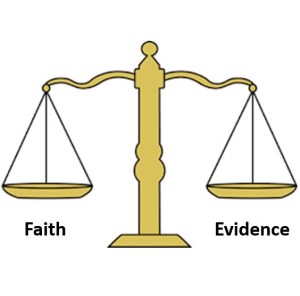
Scripture and Science – The Case for Evidence (part 3 of 3)

Honest Bible teachers will admit, “You can make the Bible say anything you want.” Churchmen sometimes inappropriately interpret verses to justify what they want to believe. Scientists likewise desire to believe their own ideas, but they have a system of looking at evidence to verify or deny those ideas. The great theologian Augustine compared secular truth to the valuable gold and silver the Israelites took out of pagan Egypt.1 He taught churchmen to appropriate God’s valuable truth from any source and use it understanding scripture. This would include evidence and science.

My first experience with faith and evidence came in engineering school. I studied a lot hoping that high grades would lead to the best job. Then I became a follower of Christ and got involved in Christian activities on campus. My involvement kept me from doing my homework before an important exam. As the professor distributed the tests, I was terrified. “God, please save me!” I prayed. To my joy, the questions were just the things I knew. When I got my graded paper back with an A, I thought, “This is wonderful. Now that I’m a Christian, I won’t need to study anymore.”

I went back to my Christian activities. At the next exam, I wasn’t worried. Matthew 21:22 promised, “If you believe, you will receive whatever you ask for in prayer.” I remember praying, “Okay Lord, I’m believing and asking.” Opening that exam, I learned that God is not a genie. Evidence showed that my biblical interpretation, influenced by self-interest, wasn’t accurate. Although the Holy Spirit can help us, God expects Christians to do our homework. 1Thessalonians 5:21 specifically related to wisdom from God says, “Test everything. Hold on to the good.” Especially when there are conflicting biblical interpretations within the church, we should look for evidence to verify or deny. The Bible is never wrong. But our interpretations can be inaccurate.

Inaccurate biblical interpretations can have consequences. I once observed a conman take money from Bible-believing churchmen. I warned them that the inflated promises, secrecy, and story inconsistencies evidenced fraud. But wanting to believe the conman, they misinterpreted verses and went ahead. Many thousands of dollars were lost. By contrast, in Acts 10, early Christians believed the message of Christ to be only for the Jewish people. After seeing evidence of Gentiles receiving the Holy Spirit, they changed their minds. I believe that those who seek God’s truth will allow evidence to change their minds.

1   De doctrina christiana, Chapter 2.40.20.60, St Augustine

Posted in Uncategorized | Leave a comment

Scripture and Science – The Case for Faith (2 of 3 parts)

“Doubting Thomas” was not present when Jesus first appeared after the Resurrection. Thomas insisted that unless he could see and touch, he would not believe. Eight days later Jesus reappeared with Thomas present. When Thomas professed belief, Jesus mildly rebuked him for not believing previously. Expecting evidence was not Thomas’ shortfall. Evidence had already been provided by the empty tomb and the eyewitness testimonies. Thomas’ mistake was demanding absolute proof. Similarly, many scientists dismiss God by demanding absolute proof. Proof negates the faith necessary to make a choice for God. “And without faith it is impossible to please God . . .” (Hebrews 11:6)

Jesus said, “… at least believe on the evidence of the works themselves.” (John 14:11) God has provided plenty of evidence for faith within the universe scientists investigate. For example, behavioral scientists have shown that anger, hatred, and even poor neighbor relations are bad for our health. Jesus taught against these 2,000 years ago. According to the big bang theory, everything suddenly appeared from nothing. Does this not shout out “God?” Interestingly, the big bang was first recognized in 1927 by MIT educated Georges Lemaitre, an ordained priest.

“For since the creation of the world God’s invisible qualities—his eternal power and divine nature—have been clearly seen, being understood from what has been made . . .” (Romans 1:20) I personally believe that mathematics can provide strong evidence of God and His goodness. However, the math is complex and involves high probabilities not the absolute proof demanded by Thomas and some scientists.

Fortunately, churchmen can help scientists to faith in Christ. Several years ago, my wife and I led a Bible-based marriage seminar near Cape Canaveral in Florida. Most of the audience were scientists or engineers at NASA. As a man of science, I carefully explained and gave evidence for my biblical interpretations. They loved the seminar and several trusted Christ. The event went so well that they asked us to repeat it later for other scientists.

Future Blog Post

Scripture and Science – The Case for Evidence

Posted in Uncategorized | Leave a comment