
Well before moving to Washington State I had developed an interest in the Oregon Trail. Pioneers, including many immigrates to the US, starting in the 1840s traveled 2,170 miles west to Oregon Territory mostly in oxen drawn wagons.
Their motivations included dire economic circumstances due to a severe depression, reports of lands that sounded magical, and thirst for adventure. American patriotism also played a role. England claimed what is now Oregon and Washington and had a foothold on the Columbia River. Spain claimed California. Patriotic Americans scrambled to secure the land for the US according to the concept of Manifest Destiny by which the US should extent from sea-to-sea. Without the Oregon Trail, our west coast probably wouldn’t be American.
The Oregon Trail would not have been possible without a 7,412 foot elevation break in the Rocky Mountains called South Pass. Journals written while in-route describe hardships unimaginable to 21st century Americans. About 35,000 travelers died on the trail and were hastily buried in unmarked graves. The survivors suffered deprivation and had to abandon prized possessions. None of them could have completed the journey without relying on each other. After the Continental Divide, the trail divided into alternate routes. But everyone, 500,000 mostly in families, had to funnel through South Pass.
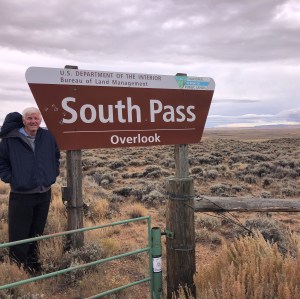
On our recent tour of the northwest, Kit and I visited South Pass, a desolate and windswept saddle of sagebrush in Wyoming. Seeing the slowly passing emigrants in my mind became an emotional experience. I marvel at their courage and perseverance. I’m tempted to moralize here. But I think I’ll allow readers to draw their own conclusions.

 More Than Ordinary Lives